- Decimal Odds
- Hong Kong Odds
- Indonesian Odds
- American Odds
- Malay Odds
 English
- English
 Vietnam

Hajime Moriyasu has officially stepped down as Japan national team manager


-
1
 Ismet ErginWon 6/6Follow90.9%Win Rate +67.7%ROI 11Tips 1.88Avg Odds
-
2
 Americas TimeFollow83.3%Win Rate +50.7%ROI 12Tips 1.88Avg Odds
-
3
 Seputar Real MadridWon 9/11Follow81.8%Win Rate +45%ROI 12Tips 1.91Avg Odds
-
4
 Mbah_tipsterWon 4/5Follow76.9%Win Rate +34.8%ROI 14Tips 1.84Avg Odds
-
5
 4
Grant CardoneWon 11/14Follow75%Win Rate +44.6%ROI 16Tips 1.91Avg Odds
-
6
 AfsiezWon 7/8Follow75%Win Rate +29.1%ROI 13Tips 1.88Avg Odds
 4
Hajime Moriyasu has officially stepped down as Japan national team manager
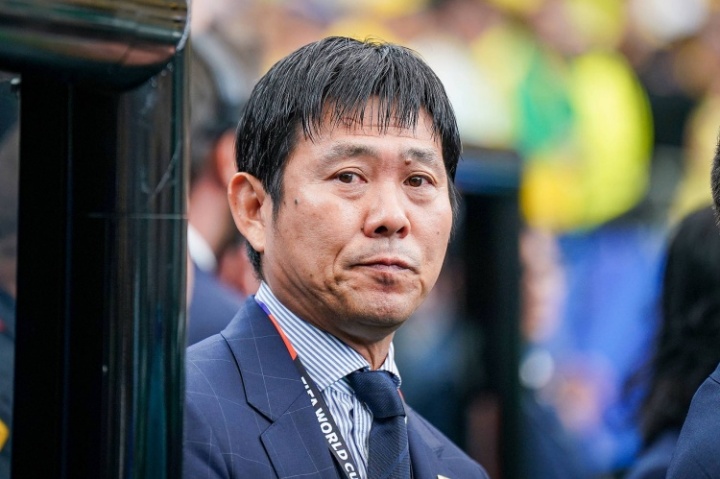
Hajime Moriyasu has officially stepped down as Japan national team manager, having previously expressed his interest in pursuing a coaching career in Europe. The Guardian has published an article examining Moriyasu's legacy and what could lie ahead for the experienced Japanese coach.
In Japan, eating KFC at Christmas is a hugely popular tradition. This year, however, millions of people enjoying their festive fried chicken have had an unexpected extra serving of food for thought: a heated debate over the achievements and shortcomings of Hajime Moriyasu's eight-year spell in charge of the national team. One consequence of the Asian Cup being postponed from January 2027 to December is that it has brought Moriyasu's tenure to an earlier end.
The 58-year-old was originally expected to remain in charge until February next year, bringing his lengthy reign to a fitting conclusion with a trophy before handing the reins to Tsuyoshi Oiwa and potentially heading to Europe to explore new opportunities. Instead, he chose to step down this month. Across 113 matches in charge, he transformed Japan into a formidable force on the world stage, although some still believe he failed to fulfil the expectations placed upon him.
It is easy to forget that Japan went through six managerial changes in the eight years before Moriyasu took over in 2018. Javier Aguirre lasted just 10 matches before being dismissed in 2015 after becoming embroiled in a corruption investigation in Spain. He was succeeded by Vahid Halilhodzic, whose reputation had been enhanced by guiding Algeria to the knockout stages of the 2014 World Cup. However, the Bosnian's pragmatic and outspoken approach never seemed entirely compatible with Japanese football.
Shinji Kagawa was dropped, Keisuke Honda found himself on the bench, and other players appeared equally unsettled. Japan's humiliating 4-1 defeat to South Korea in December 2017 prompted an emergency meeting at the Japan Football Association. Halilhodzic was subsequently dismissed in April 2018, just weeks before the World Cup.
This was hardly the image of calm and stability traditionally associated with the Samurai Blue. The situation became even more contentious when Halilhodzic threatened legal action against JFA president Kozo Tashima, who is currently campaigning for the FIFA presidency, alleging that his dismissal was unlawful. At the 2018 World Cup, Japan, under Akira Nishino, only squeezed into the knockout stages thanks to having fewer yellow cards than Senegal.
Things became considerably more stable after Moriyasu took charge. Under his leadership, Japan established themselves as the dominant force in Asia. Supporters only need to look at some of their regional rivals to see how badly things can go wrong. South Korea boast an abundance of talent, including Son Heung-min, Paris Saint-Germain midfielder Lee Kang-in and Bayern Munich defender Kim Min-jae. Yet they have struggled at the World Cup and subsequently descended into further turmoil.
Iranian supporters are desperate to see head coach Amir Ghalenoei dismissed, while Saudi Arabia sacked their manager on the eve of the World Cup, with disastrous consequences. Qatar, meanwhile, who have won back-to-back Asian Cup titles, are also expected to part ways with Julen Lopetegui following a disappointing spell.
Of course, Japan's progress has not simply been a result of their rivals falling behind. The national team have made significant improvements of their own, steadily raising their standards and developing greater confidence. In March 2025, Japan became the first nation to qualify for the World Cup. Captain Wataru Endo told supporters that simply reaching the tournament was no longer enough and that the team's ambition should be to win it.
That ambition may have been somewhat optimistic, and Moriyasu subsequently adopted the more realistic target of reaching the quarter-finals. Japan cruised through the group stage before facing Brazil in the round of 32. During the first half in Houston, the South American giants were completely outplayed. However, Japan retreated in the second half and were eventually punished by a stoppage-time winner. Even worse, it marked the fifth time Japan had failed to progress beyond the opening knockout round.
Looking back at 2022, Japan may have shown too much respect for Croatia before eventually losing on penalties. That defeat further intensified questions about Moriyasu's approach, particularly whether his tactics were too cautious and conservative in decisive moments, especially as he gained access to an increasingly talented group of players.
His record in major Asian competitions was also far from flawless. The 2019 Asian Cup defeat cannot be entirely blamed on a relatively new manager, but the quarter-final exit at the 2023 tournament was undoubtedly disappointing. Nevertheless, as four-time Asian Cup champions, Japan now have considerable confidence in their position at the top of Asian football and increasingly measure their progress against the world's elite.
The disappointment of failing to beat Brazil at the World Cup is, in itself, evidence of how far Japan have progressed. Anyone who remembers Japan's 4-0 defeat to Brazil in 2014, when Neymar scored all four goals, will appreciate how unimaginable such expectations would have seemed back then.
Earlier this month, Japan defeated Brazil 3-2, marking their second victory over the five-time world champions in just 13 months. During that period, Japan also became the first Asian nation to defeat England. Moriyasu had opened the door to the world's elite and may even have managed to unlock it, but he ultimately failed to step all the way through. That will now be the task facing his successor.
There are, however, other doors waiting to be opened. Moriyasu is reportedly very interested in managing in Europe. Yet, as he is neither European nor South American, securing a position at a major club or in a top-tier league that reflects his experience and achievements, including three J.League titles, could prove difficult.
Every journey has to begin somewhere, followed by a second step and then a third. The debate over the true success of Moriyasu's international managerial career may continue, but there is now hope that he can leave a valuable pioneering legacy for Japanese and Asian coaches seeking to make their mark on European football.