- Decimal Odds
- Hong Kong Odds
- Indonesian Odds
- American Odds
- Malay Odds
 English
- English
 Vietnam

De Jong’s Knee Injury Analyzed: Expert Explains Recovery Timeline and Potential Risks


-
1
 kolkatathekeWon 11/12Follow91.7%Win Rate +64.1%ROI 14Tips 1.88Avg Odds
 -
2
 The Touchline | 𝐓Won 6/6Follow80%Win Rate +51.6%ROI 11Tips 1.92Avg Odds
 -
3
 ★BANK★Won 8/10Follow80%Win Rate +32.7%ROI 10Tips 1.79Avg Odds
 -
4
 Win betsWon 17/20Follow78.1%Win Rate +45%ROI 33Tips 1.91Avg Odds
 -
5
 arpan paulWon 14/18Follow76.2%Win Rate +33.9%ROI 23Tips 1.83Avg Odds
 -
6
 Messitano Fan 💙❤️Won 12/15Follow75%Win Rate +40.1%ROI 32Tips 1.90Avg Odds

De Jong’s Knee Injury Analyzed: Expert Explains Recovery Timeline and Potential Risks
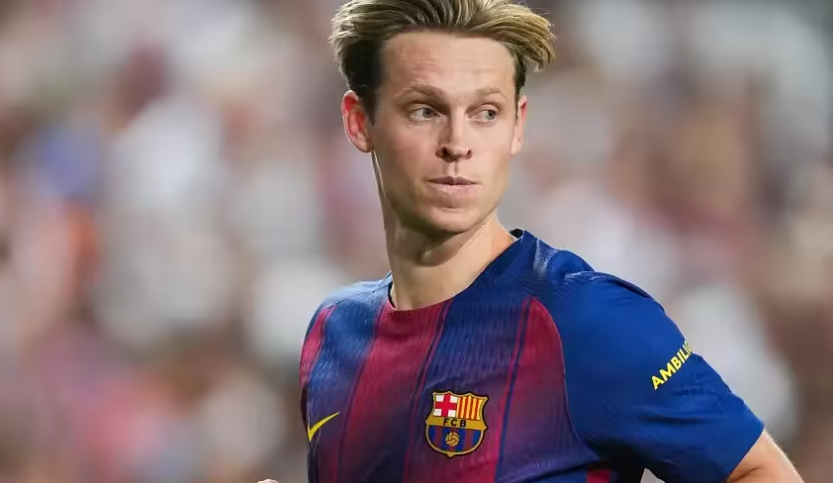
Barcelona have officially announced that Frenkie de Jong has suffered a tear in the medial collateral ligament (MCL) of his right knee. Medical expert Jordi Surós analyzed De Jong’s injury in an interview with Mundo Deportivo.
The expert said:
“In my opinion, the two statements are consistent. The club announced the diagnosis and treatment plan, while De Jong explained how the injury developed. What we still do not know is whether the ligament tear is partial or complete, the exact location of the tear, and the stability of the knee joint. The medial collateral ligament has a rich blood supply and a much stronger healing capacity than other ligaments, such as the anterior cruciate ligament. That is why many injuries of this type can recover without surgery.”
“We should not only focus on the ligament itself. It is crucial to examine its bony attachment points on the femur and tibia. In this type of trauma, bone edema or bone trabecular bruising is relatively common, and these issues can only be accurately detected through an MRI scan. This type of swelling may not be obvious during the initial examination, especially when the knee appears clinically stable. The edema itself does not cause a new tear, but it does indicate that the connection between the bone and ligament has also been affected. If excessive stress is applied too early, it could lead to poor healing, persistent pain, or even an avulsion injury. The medial meniscus must also be evaluated, as the same trauma that damages the deep layers of the MCL or the posteromedial corner of the knee can also cause a meniscus tear or detachment. This could explain why an injury initially considered minor was later reclassified as more serious.”
The expert also offered his recommendation:
“Personally, we would recommend a comprehensive conservative treatment plan. In the first phase, we would protect the knee from valgus stress and rotational forces while controlling pain, inflammation, and bone edema. Conservative rehabilitation would gradually restore his mobility, quadriceps and hamstring strength, proprioception, and neuromuscular control. This rehabilitation process is not only essential for restoring stability but also for helping the player rebuild confidence in his knee.”
In the best-case scenario, De Jong could return within six weeks. The expert explained:
“If it is a partial and stable tear, the ideal recovery period would be four to six weeks. If it is a complete but isolated tear and conservative treatment is successful, it would likely take around two to three months. The worst-case scenario would involve an avulsion fracture at the ligament attachment point, a displaced tear, or severe instability involving other structures. In that situation, surgery may be required, and the recovery time would be significantly longer. The fact that they have not considered immediate surgery is certainly a positive sign. However, De Jong’s return timeline should not be determined solely based on this case.”