- Decimal Odds
- Hong Kong Odds
- Indonesian Odds
- American Odds
- Malay Odds
 English
- English
 Vietnam

Henry Winter: Spain’s World Cup Triumph Was a Victory for Football Itself


-
1
 Elvis Coleman 🙂↔️Follow80%Win Rate +39.2%ROI 28Tips 1.80Avg Odds
 -
2
 Declan ₿Won 8/10Follow80%Win Rate +38.6%ROI 13Tips 1.79Avg Odds
 -
3
 GoalwireHQWon 5/5Follow80%Win Rate +48.1%ROI 10Tips 1.92Avg Odds
 -
4
 arpan paulWon 9/9Follow77.8%Win Rate +38.4%ROI 19Tips 1.82Avg Odds
 -
5
 Axel InsulanderWon 10/13Follow76.9%Win Rate +45.1%ROI 13Tips 1.89Avg Odds
 -
6
 Antons Luckn BFollow73.7%Win Rate +23.7%ROI 19Tips 1.86Avg Odds

Henry Winter: Spain’s World Cup Triumph Was a Victory for Football Itself
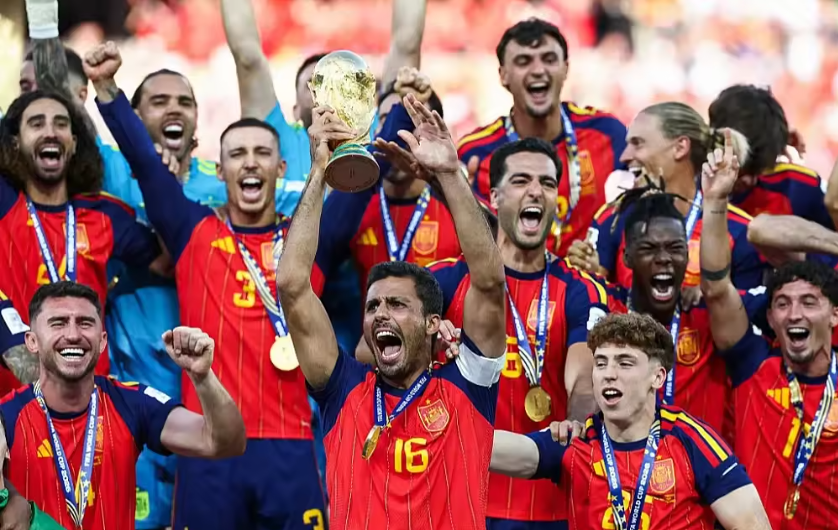
In the 2026 World Cup final, Spain defeated Argentina 1-0 in extra time to win the championship. After the match, veteran British football journalist Henry Winter published a commentary article, stating that Spain’s triumph was a victory for football itself.
Henry Winter’s Main Views on Spain’s Victory
This victory was not only a triumph for De la Fuente and his players, but also a victory for football.
For those who believe football should showcase emotion rather than aggression, this was a victory. Argentina’s combative and physical style was defeated by Spain’s smooth and elegant approach. As Spain completed the decisive move through a series of fluid and coordinated passes, the fans in the stadium chanted “Ole, Ole!”, a phrase that perfectly matched the flow of the game
Spain continued to rely on its traditional style of play, using delicate passing combinations, controlled possession, and excellent coordination with the ball. Argentina’s approach, in contrast, was built around intense physical battles and aggressive challenges.
Argentina’s overall conduct during the match lacked discipline. Enzo Fernández was sent off after repeated fouls and constant protests toward the referee, and he still refused to show restraint when leaving the pitch. After the final whistle, tensions remained high between both sides, with Leandro Paredes continuing to provoke Spanish players. As one of the greatest footballers of all time, Lionel Messi was subjected to constant physical pressure throughout the match, which was unfortunate to see.
Messi lacked sufficient support from his teammates throughout the game. With limited opportunities to receive the ball, he struggled to showcase his technical ability. The way his World Cup journey ended was extremely disappointing, and the root cause was related to his team’s approach: Argentina focused too heavily on physical battles while neglecting combination play and possession-based football.
Many Spanish fans were dissatisfied with Slovenian referee Slavko Vinčić’s decisions, believing that he allowed Argentina to commit too many disruptive physical challenges. They also criticized FIFA president Gianni Infantino, accusing him of favoring famous star players. From the perspective of English fans, Argentina’s tactical adjustments and substitutions in the second half resembled the physical and combative style of Brazil’s 1970 team, which further increased disappointment among observers.
Among the spectators were many members of Spain’s 2010 World Cup-winning squad, the generation led by players such as Andrés Iniesta. They had experienced a similar situation in the 2010 final in Johannesburg, where they faced a large number of aggressive challenges from the Netherlands.
Spain withstood Argentina’s intense physical pressure throughout the match and remained composed. This Argentina side cannot be considered one of the greatest teams in history. Messi’s talent is irreplaceable, but many players in the squad were primarily known for their physical strength and ability in tough battles.
The entire match was played at a high intensity, with fierce physical battles throughout. During stoppage time, both teams showed signs of extreme fatigue, and conflicts repeatedly broke out on the pitch. Several players were unable to continue after heavy collisions. The introduction of Giovanni Simeone also sparked dissatisfaction among fans, while Paredes was involved in an aerial collision with an opponent that was widely criticized.
In the end, Spain secured victory through a coordinated team move and scored the decisive goal, winning the match and lifting the World Cup trophy.